1980: "The Elephant Man"
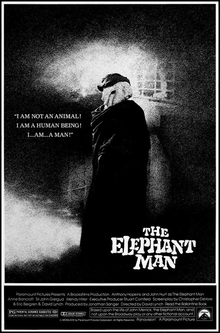
This is an odd film for David Lynch. On one hand, the macabre subject matter is perfect for Lynch (a recurring theme of freaks and deformities show up in his films). At the same time, the rather straightforward, sentimental story is unusual for the elliptical surrealism that Lynch is used to (then again, this was only his second feature film so he hadn't quite established his own identity). The bookend scenes of the movie are very Lynchian but that's about as close as it gets. It definitely feels more in the vein of an early Tim Burton film (pop gothic meets mainstream tastes). The movie was also produced by Mel Brooks, known for his comedies (he hid his name from any promotional materials so the general public would not think they were seeing a comedy). Thinking about it, I can understand Brooks' involvement in it. Brooks, a Jewish man, has been known for his satires of social and historical prejudice (The Producers, Blazing Saddles, To Be or Not to Be) so he probably saw a kindred spirit in the socially rejected Joseph Merrick.
That being said, The Elephant Man is a good film, though I can understand critics finding it a bit mawkish. It definitely falls into the trope-y beats of an outsider story.....but it's more forgivable in this, mainly because it earns those moments. John Hurt gives a beautifully sensitive performance even under all that makeup. Anthony Hopkins, as well, plays Dr. Treves with quiet compassion.
Another big positive that helps the movie is the setting and atmosphere, which strengthens the movie thematically. Taking cues from his previous film, Eraserhead, it's shot in black-and-white and depicts society in a state of decay. The movie is set in post-Industrial Revolution London, so we see staid Victorian society butting heads with the grungy, mechanized world of steamy, oily machinery. This world, much like the one in Atlantic City, is one in transition from romanticized Old World values to cold, cruel mechanization. It makes Merrick's journey all the more challenging in that regard. One detail that stuck with me (and it might seem somewhat trivial) are the gas lamps in the hospital. It gives off this impression of some medieval castle, evoking a somewhat barbaric past, before sterilization and germ prevention (Hopkins actually uses a flame to cauterize a wound during surgery). I don't know why, it just adds a touch of diseased decay to the proceedings. And at the core of this doom and gloom is a warm story of kindness.
I'm not sure where I would place this in Lynch's filmography (I'm not even sure what most Lynch diehards think of it), but I think it's a strong effort from him. It's a movie that manages to be both a tale of surreal ugliness and quiet grace.


Comments
Post a Comment